/ overview
Bring retrieval into the browsing workflow.
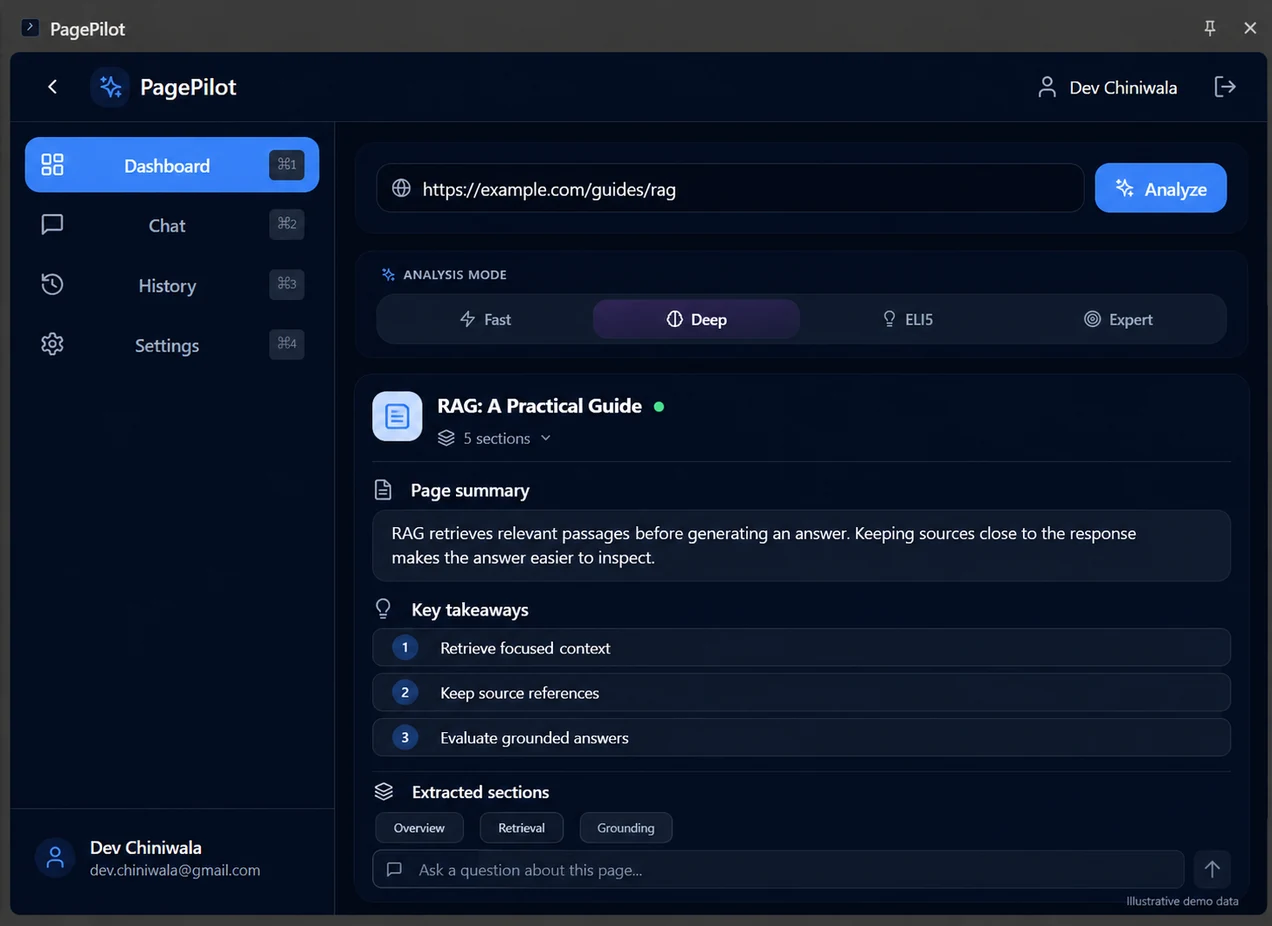
PagePilot connects the current webpage to an AI workspace inside a Chrome extension. It supports summarization and questions about page content through a backend retrieval pipeline.
The repository includes the React extension, a FastAPI backend, database configuration, and a Docker Compose setup.
/ problem
The webpage should stay in context.
Copying content into a separate chat loses the relationship between a question and the page it came from. Long pages also need selection and retrieval rather than being inserted into every prompt in full.
/ architecture
A browser surface and a retrieval service.
The extension captures webpage context and calls FastAPI. LangChain coordinates the retrieval and Gemini generation path, with ChromaDB for vector retrieval and PostgreSQL for application persistence.
- Keep the extension UI separate from model credentials.
- Retrieve relevant page content before generating an answer.
- Use the backend as the integration boundary for storage and AI services.
/ Engineering decisions
Give each layer one clear responsibility.
The extension owns the user’s browsing workflow. The backend owns model integration and retrieval. Separating those concerns keeps provider credentials out of extension bundles and allows the retrieval path to change independently.
A retrieved passage provides grounding context; it does not by itself guarantee an answer is correct.
/ challenges
Webpages are inconsistent inputs.
Page extraction, changing DOM structure, content size, and backend availability all affect the experience. A useful browser workspace must keep those limits visible rather than hiding them behind an apparently fluent answer.
/ results
An end-to-end browser AI project.
The public repository includes the extension, retrieval backend, database configuration, and local setup instructions. Together they connect page context to a conversational interface inside the browser.
/ learnings
Context belongs in the product interaction.
The useful engineering connection is between page context, retrieval, and a compact browser interface. Future evaluation can measure whether responses remain grounded across long, dynamic, and poorly structured pages.
Source record
Sources & technical context
Architecture summaries are based on the linked documentation and source. Current implementation details and limits live in the repository.
- Extension, backend, and setupReviewed